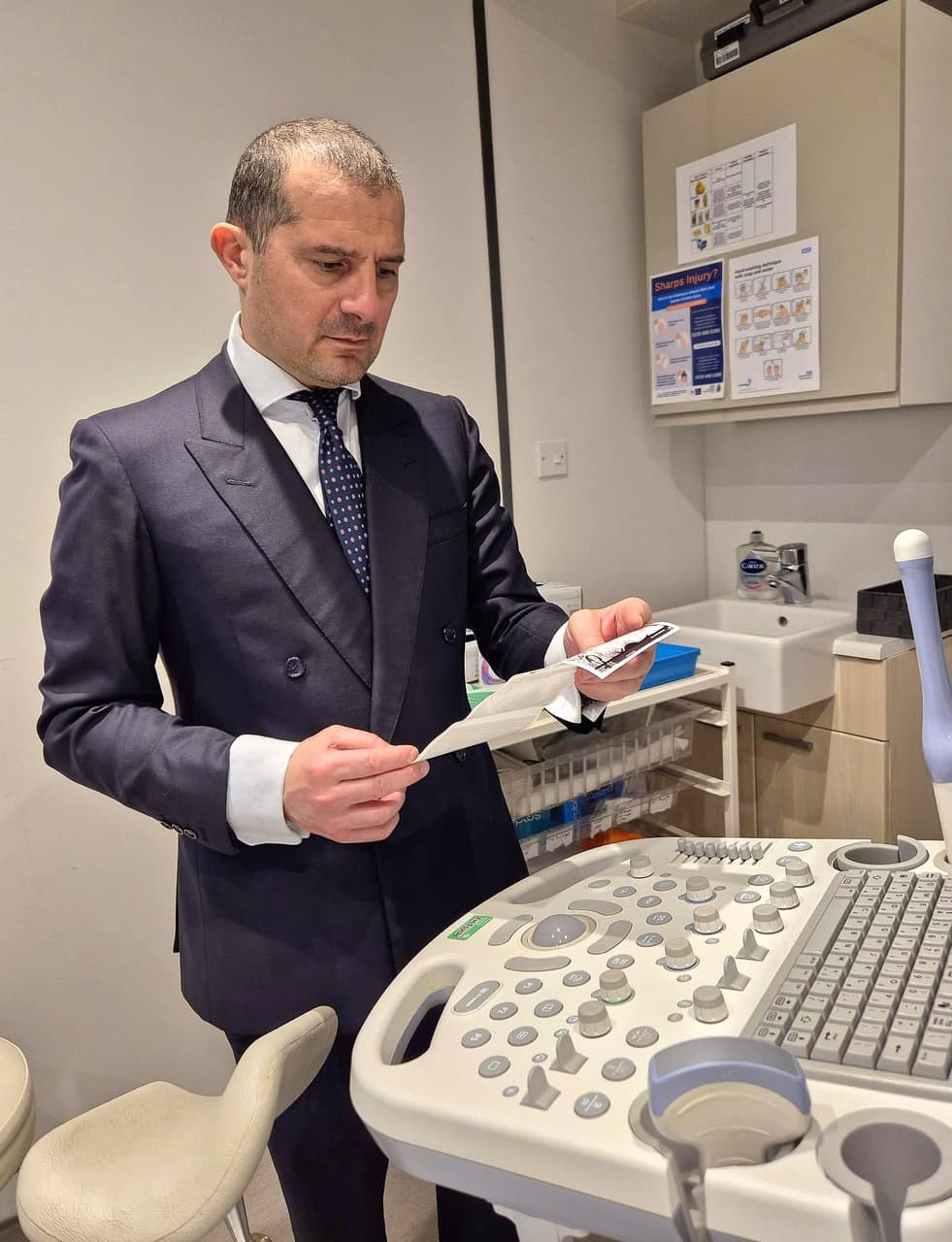
Recurrent Implantation Failure: Diagnosis and Treatment After Failed IVF
A structured specialist review before your next embryo transfer — London
When good-quality embryos are transferred again and again without a pregnancy, it is exhausting — physically, emotionally and financially. Before another cycle, it is worth stepping back to look at the whole picture: the embryos, the uterus and endometrium, the transfer itself, and the health of both partners.
Before your next cycle
Another transfer is not always the answer
Repeating the same protocol and hoping for a different result is common, and it is rarely the best use of your time, your embryos or your money. A focused review of your previous cycles, combined with targeted tests, shows whether something needs to change — and what.

Who this pathway is for
Does this sound like your IVF journey?
Several transfers, no pregnancy
Two, three or more embryo transfers — fresh or frozen — have ended in a negative test, or a positive test that faded within days.
Good embryos, same result
Your embryos were graded well, and perhaps even genetically tested, yet none of them has implanted.
“Just try again”
Each failed cycle was followed by the same plan, and no one has explained what might be going wrong.
If this feels familiar, a structured review before the next transfer is usually the most useful step you can take.
What is recurrent implantation failure?
Recurrent implantation failure (RIF) describes embryo transfers that repeatedly fail to produce a pregnancy, even though the embryos were considered good quality. There is no single agreed threshold: the European Society of Human Reproduction and Embryology (ESHRE) describes it as viable embryos failing to implant often enough, for that particular patient, to justify further investigation. In practice it is usually considered after several transfers of good-quality embryos — often three or more — without a pregnancy.
Why do good embryos fail to implant?
Implantation needs a chromosomally normal embryo and a receptive endometrium to meet at the right time. The most common reason a transfer fails is a chromosomal abnormality in the embryo that grading under the microscope cannot detect, and it becomes more likely with age. Less often the cause lies in the uterus or endometrium, in the sperm, in a medical condition such as thyroid disease or antiphospholipid syndrome, or in how the cycle and the transfer were managed.
How it works
Your pathway, step by step
From your cycle records to a clear plan for the next transfer.
Review of every cycle
Bring your IVF records — stimulation protocols, egg and embryo numbers, embryology reports, genetic results and transfer notes. We go through them in detail, with your partner where relevant.
Targeted investigations
Only the tests your history justifies, across six areas: embryo and genetic, uterine, endometrial, immune, hormonal and clotting, and male factor.
Results explained
We go through every result in plain language, including what each test can — and cannot — tell you.
A plan for the next transfer
One evidence-based plan: what to change, what to treat first and when it makes sense to transfer again. IVF treatment itself takes place at an HFEA-licensed centre.
Investigations for Recurrent Implantation Failure
A thorough assessment may include:
Previous Cycles and Embryo Factors
The embryo is the most frequent reason a transfer fails, so the starting point is a careful look at your cycles:
- Stimulation protocols, ovarian response and egg maturity
- Fertilisation, embryo development and grading reports
- Results of any previous embryo genetic testing (PGT-A)
- Parental chromosome analysis (karyotyping) when indicated
Chromosomal abnormalities in embryos become more common with increasing maternal age and are the most frequent single cause of implantation failure.
Uterine Cavity and Fallopian Tubes
A problem inside the uterus can stop even a healthy embryo from implanting. Investigations may include:
- 3D pelvic ultrasound to assess the shape of the uterus and the endometrium
- Diagnostic hysteroscopy to look for polyps, fibroids, adhesions or a septum
- Assessment for adenomyosis
- Checking for hydrosalpinx — fluid-filled tubes — which is known to lower IVF success rates
Endometrium and Implantation Environment
In selected cases, further tests of the endometrium may be considered:
- Endometrial biopsy with CD138 staining for chronic endometritis
- Endometrial microbiome assessment in selected patients
- Endometrial receptivity testing (such as ERA) in specific circumstances
The HFEA, the UK fertility regulator, currently gives endometrial receptivity testing a red rating for most fertility patients. We only consider it in specific circumstances, and explain the evidence before you decide.
Immune and Autoimmune Factors
The immune system plays a part in implantation, but testing needs to be selective. In appropriate patients it may include:
- Antiphospholipid antibody testing
- Thyroid antibodies (thyroid peroxidase)
- Review of autoimmune and inflammatory conditions
- Selected reproductive immunology markers where clinically justified
Several immune treatments offered after failed IVF — such as IVIG and steroids — are rated red by the HFEA for most fertility patients. We only use immune-modulating treatment when your results and history justify it, and explain the limits of the evidence first.
Hormonal, Metabolic and Clotting Factors
General health affects implantation. Tests may include:
- Thyroid function and prolactin
- Metabolic screening, including insulin resistance and PMOS (previously known as PCOS)
- Vitamin D
- Antiphospholipid syndrome screening, and selected thrombophilia tests where your personal or family history suggests it
Male Factor
Implantation failure is not only a female issue — half of the embryo's genetic material comes from the sperm:
- Semen analysis reviewed alongside your IVF results
- Sperm DNA fragmentation testing
- Andrology assessment with Prof Fabio Castiglione when indicated
Treatment Options
What we recommend depends on what the assessment finds. Options may include:
Why VITA
A specialist second opinion, not just another cycle
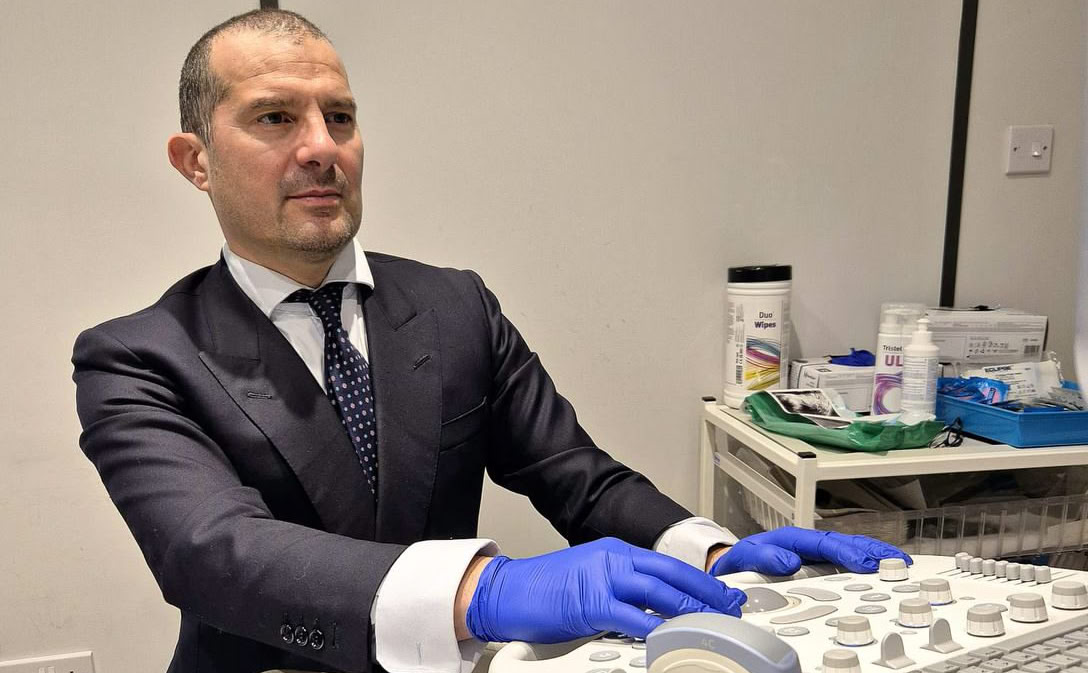
Dr Simone Rofena has over 25 years in reproductive medicine, including many years leading one of London's best-known fertility clinics. He looks at implantation failure as a whole — embryo, uterus, immune system, general health and the male partner — rather than one test at a time.
Questions patients ask
Frequently asked questions
How many failed IVF cycles count as recurrent implantation failure?
There is no single number that applies to everyone: it depends on your age, how many embryos were transferred and their quality. As a guide, it is reasonable to ask for an assessment after two or three transfers of good-quality embryos without a pregnancy — and sooner if you are older or have few embryos left.
Is it always the embryo?
The embryo is the most common reason, especially with increasing age, because chromosomal abnormalities cannot be seen with standard grading. But when several good embryos have failed, it is important to also check the uterus, the endometrium, general health and the male partner.
Should I have PGT-A after failed IVF?
PGT-A tests embryos for chromosomal abnormalities before transfer. It can help some patients avoid transferring embryos that are abnormal, but the HFEA currently gives it a red rating for most fertility patients as a way of improving the chance of having a baby. Whether it makes sense for you depends on your age, how many embryos you have and your history, so we discuss it case by case.
Should I have an endometrial receptivity (ERA) test?
Endometrial receptivity tests aim to identify the best day for embryo transfer. The HFEA currently gives them a red rating for most fertility patients, so we do not recommend them routinely. In specific situations they may be worth discussing, and we will explain why before you decide.
Do NK cell tests or immune treatments help?
Some immune conditions, such as antiphospholipid syndrome, are well established and treatable. Many other immune tests and treatments offered after failed IVF are not supported by good evidence, and the HFEA rates treatments such as IVIG and steroids red for most fertility patients. We only consider immune treatment when your results and history justify it, and explain the limits of the evidence first.
Can you review cycles I had at another clinic?
Yes — this is one of the most useful parts of the assessment. Bring or send your cycle summaries, embryology reports and any test results, and we will go through them with you at the first consultation.
Should my partner be assessed too?
Often, yes. Sperm quality, including DNA fragmentation, can affect how embryos develop. Your partner can be assessed in parallel by Prof Fabio Castiglione through our Couple Fertility pathway.
Where does treatment take place?
Consultations take place at VITA Fertility Clinic in London. Investigations and procedures are arranged at the appropriate facility, and IVF treatment is carried out at an HFEA-licensed centre.
Understanding comes before the next attempt
Recurrent implantation failure rarely has a single, simple explanation. A careful review of what has already happened, with targeted investigations, gives you a clearer picture of your chances and of what — if anything — should change before your next transfer.
At Vita Fertility Clinic we support patients with complex IVF histories with honest advice, evidence-based care and continuity from the first consultation to the next pregnancy.
A related pathway
Pregnancies that end in miscarriage
If your embryos do implant but the pregnancies are lost, the focus of the investigation changes. Our recurrent miscarriage pathway looks at genetic, uterine, immune, clotting and hormonal causes, with a plan for the next pregnancy.